
NATIONAL WAREHOUSING EXCELLENCE SUMMIT 2026
Warehousing 4.0: Intelligent, Resilient and Sustainable Supply Chains
07th August 2026, FridayTAJ Santacruz
India’s warehousing sector is no longer a passive infrastructure segment - it is a strategic lever of national competitiveness. As global supply chains undergo structural reconfiguration driven by geopolitical realignment,nearshoring imperatives, and accelerating technological disruption, warehousing has emerged as the critical node where resilience is built, customer experience is delivered, and operational advantage is won or lost.
The forces reshaping warehousing are structural and accelerating simultaneously. Logistics cost as a proportion of GDP remains a measure of systemic inefficiency that policy is now directly targeting. Grade A warehouse stock is expanding across tier-1 and tier-2 markets, while e-commerce, quick-commerce, pharmaceutical exports, and automotive Just-in-Time (JIT) replenishment are together driving demand for specialised, technology-enabled, and strategically located infrastructure. Yet adoption of advanced warehouse management systems, automation, and sustainable operational practices remains deeply uneven - creating significant competitive differentiation between sector leaders and laggards.
Three forces are converging to define warehousing’s next chapter: the deployment of intelligent automation and digital systems at enterprise scale; the institutionalisation of environmental, social, and governance standards in facility design and operations; and the alignment of policy, capital, and talent frameworks required to deliver a step-change in sector capacity and capability.
The National Warehousing Excellence Summit 2026 will convene leaders from operations, technology, finance, and policy to examine the practical architecture of warehousing operations that are intelligent, sustainable, and capable of delivering superior supply chain outcomes across India’s most dynamic sectors. The summit will explore how organisations across the value chain - from developers and operators to occupiers and investors - can collectively accelerate the transition to Warehousing 4.0.
The summit will focus on three strategic themes

Intelligent Automation and the Digital Warehouse
Sustainable Infrastructure and Specialised Operations
Policy, Investment and Talent for Sector-Wide Scale
SESSION 1
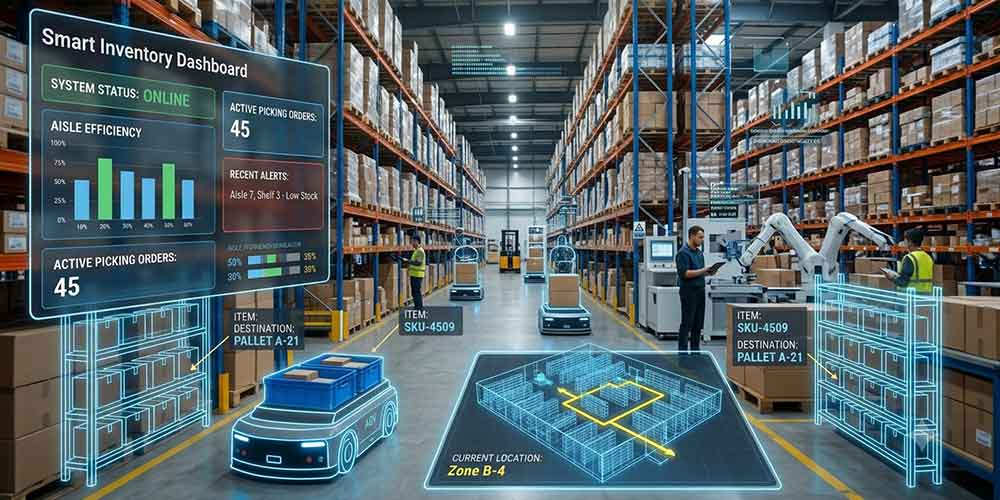
SESSION I: INTELLIGENT AUTOMATION AND THE DIGITAL WAREHOUSE
Warehouse operations are undergoing a fundamental transformation. The convergence of AI-driven warehouse management systems, autonomous mobile robots, computer vision, and IoT-enabled asset tracking is reshaping how inventory is managed, orders are fulfilled, and exceptions are resolved. For Indian warehousing to reach world-class operational benchmarks, technology adoption must move decisively from pilot-stage experimentation to enterprise-wide deployment - and the roadmap for doing so requires clarity on use cases, economics, and integration architecture.
- How are leading operators deploying AI-powered WMS and advanced analytics to optimise slotting, labour allocation, and throughput at scale?
- How can we expand deployment of autonomous mobile robots, AS/RS systems, and co-bots within existing infrastructure constraints without requiring greenfield investment?
- What role does computer vision play in inbound quality control, packing accuracy, and exception management - and how mature is Indian adoption?
- How should CIOs and supply chain leaders structure technology roadmaps to progress from fragmented point solutions to integrated digital warehouse ecosystems?
- What cybersecurity and data governance frameworks are essential as warehouse connectivity and data interdependence intensify?
SESSION 2
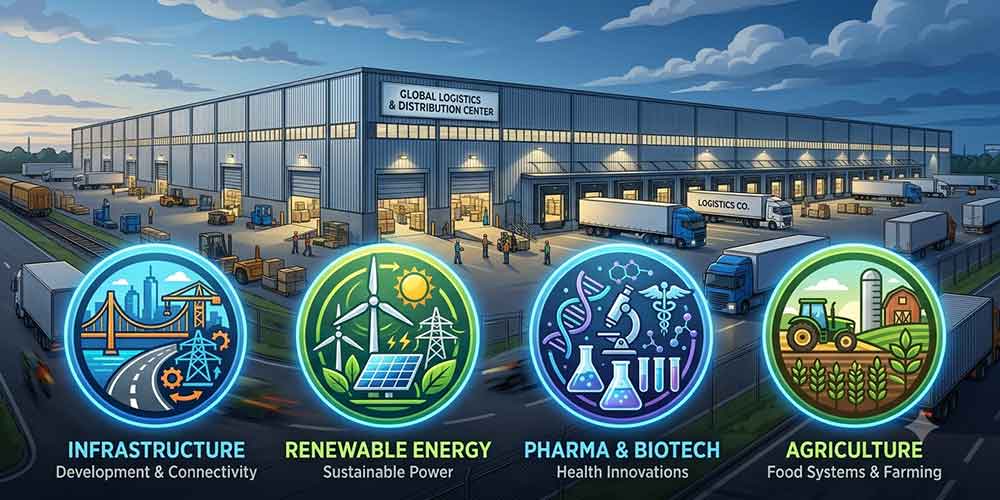
SUSTAINABLE INFRASTRUCTURE AND SPECIALISED OPERATIONS
Sustainability and specialisation have crossed from competitive differentiator to threshold requirement. Institutional investors, multinational occupiers, and tightening regulatory frameworks are collectively driving demand for green-certified, energy-efficient facilities at a pace that outstrips current supply. Simultaneously, the structural growth of pharmaceutical exports, organised food retail, and temperature-sensitive fulfilment is creating demand for cold chain and controlled-environment warehousing that India’s existing infrastructure remains insufficiently equipped to serve.
- What role must developers, occupiers, and government play in co-creating sustainable, specialised logistics infrastructure at the pace and scale to match rising demand?
- How are leading developers and operators integrating net-zero design principles, on-site renewable energy, and green certification into new builds and retrofits - and who is bearing the incremental cost?
- What do ESG-linked leasing structures and sustainability performance contracts look like in practice, and how are landlord-tenant relationships being restructured around shared environmental accountability?
- Where does India’s cold chain infrastructure gap sit today, and which sectors - pharmaceutical, agri-food, or e-grocery - present the most compelling investment cases, especially in view of WHO-GDP, FSSAI, and advanced temperature monitoring standards?
- How can multi-temperature facility design and IoT-enabled condition monitoring deliver both regulatory compliance and commercial differentiation?
SESSION 3
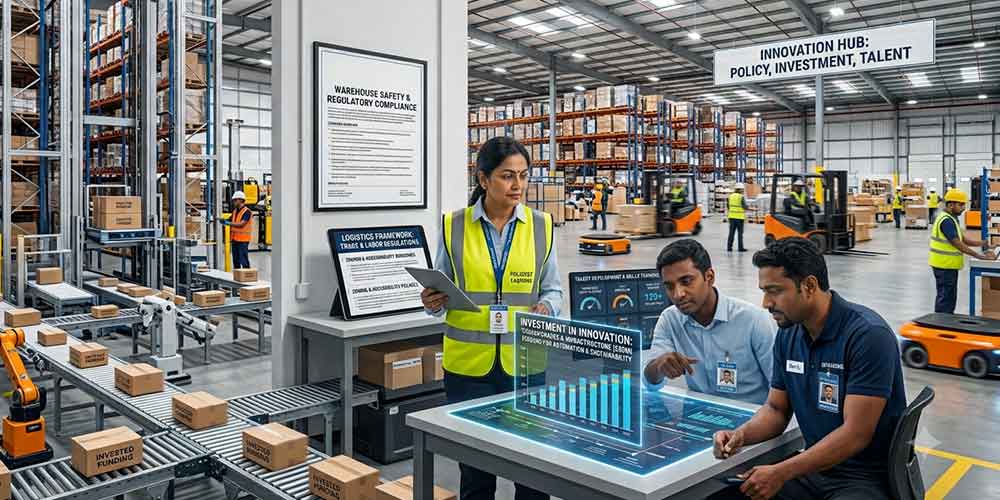
POLICY, INVESTMENT AND TALENT FOR SECTOR-WIDE SCALE
India’s warehousing ambition requires decisive alignment across three enabling pillars: capital, policy, and people. Institutional investors are deploying capital into logistics infrastructure - yet land availability, clearance complexity, and regulatory friction remain persistent constraints that erode returns and delay timelines. Simultaneously, the sector’s talent pipeline is structurally inadequate for the automation-intensive, compliance-driven operating environment that is emerging, requiring a fundamental redesign of how skills are developed, certified, and advanced across the workforce.
- What are the most material policy and regulatory bottlenecks constraining Grade A warehouse development - and what specific action from central and state governments would move the needle?
- How are REITs, InvITs, and infrastructure debt instruments reshaping the capital structure and risk profile of warehousing investment in India?
- What is the credible investment thesis for tier-2 and tier-3 city warehousing - and how do developers and occupiers jointly unlock these markets?
- How must qualification frameworks and competency standards be redesigned to prepare the warehouse workforce for a fully digital, automated, and data-driven operating environment?
- How are India’s leading operators building the employer brand and career architecture required to attract technology-enabled talent to a sector historically reliant on blue-collar workforce models?
- What governance structures, incentive mechanisms, and industry compacts are required to drive meaningful gender inclusion and workforce formalisation at scale?
Contact
Register
+91-98791 60202 +91-72003 79132 sreeramkumar.j@cii.in conference.cii@cii.in
Register Online

Sponsor Enquiry
+91-72003 79132 +91-98791 60202 sreeramkumar.j@cii.in smitha.nair@cii.in